

Experience Qingdao
Overview
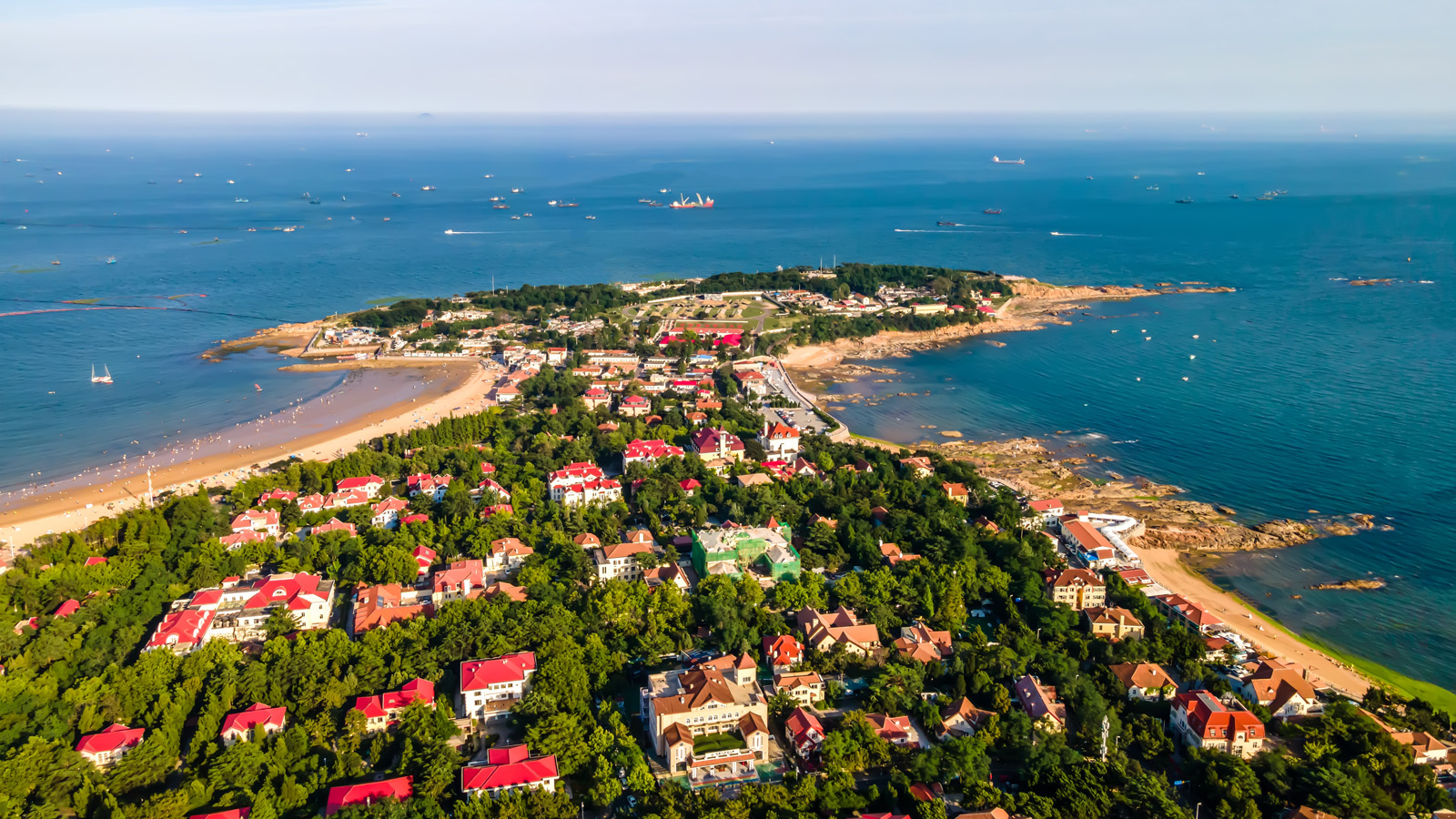
Believe it or not, the unique Qingdao is quite a visual anomaly in China. Famous for its moniker “Red tiles, green trees, blue sea, and azure sky,” it feels like a Bavarian village transplanted onto the Yellow Sea coast.
It is a city defined by its dual heritage—German colonial architecture and Chinese maritime tradition—and its universal love language: beer. Here, the air smells of salt and hops, and the mountains tumble directly into the ocean.
Orientation
The city wraps around the Jiaozhou Bay. The Shinan District is the historic and tourist heart, hugging the southern coastline. It is split into the Old Town (west) with its colonial villas and the CBD/May Fourth Square (east) with its skyscrapers. To the east lies the Laoshan District, the gateway to the mountains and beaches. Across the bay (connected by the world’s longest sea bridge) is Huangdao, the sprawling new West Coast economic zone.

Nature & Wildlife
Mount Laoshan is the city’s crowning natural jewel. As the highest coastal mountain in China, it holds deep spiritual significance as the birthplace of Taoism. The Taiqing Palace route offers a hike where ancient ginkgo trees and Taoist temples sit against a backdrop of the misty ocean—a landscape often compared to traditional ink paintings. For a coastal escape, walk the Wooden Boardwalk that stretches over 40km along the shoreline. In winter, the Zhan Qiao Pier becomes a feeding ground for thousands of Siberian Seagulls, a seasonal migration that draws photographers and locals to the water’s edge.

Gastronomy
In Qingdao, you drink beer like water. The Tsingtao Brewery is legendary, but the local experience is drinking fresh beer (Sanpi) sold in plastic bags by weight on the street. This is paired inevitably with Spicy Clams (Gala), stir-fried with chili and garlic.
Another regional specialty is Mackerel Dumplings, where fresh fish mousse replaces the standard pork filling for a lighter, bouncier texture. For a grand meal, visit Yunxiao Road Food Street, where tanks of live crab, abalone, and sea cucumbers line the sidewalks.
Nightlife
The night centers on Dengzhou Road (Beer Street), located right outside the original brewery. It is a rowdy, neon-lit strip where open-air restaurants serve pitchers of raw, unfiltered stout and pilsner.
Read More
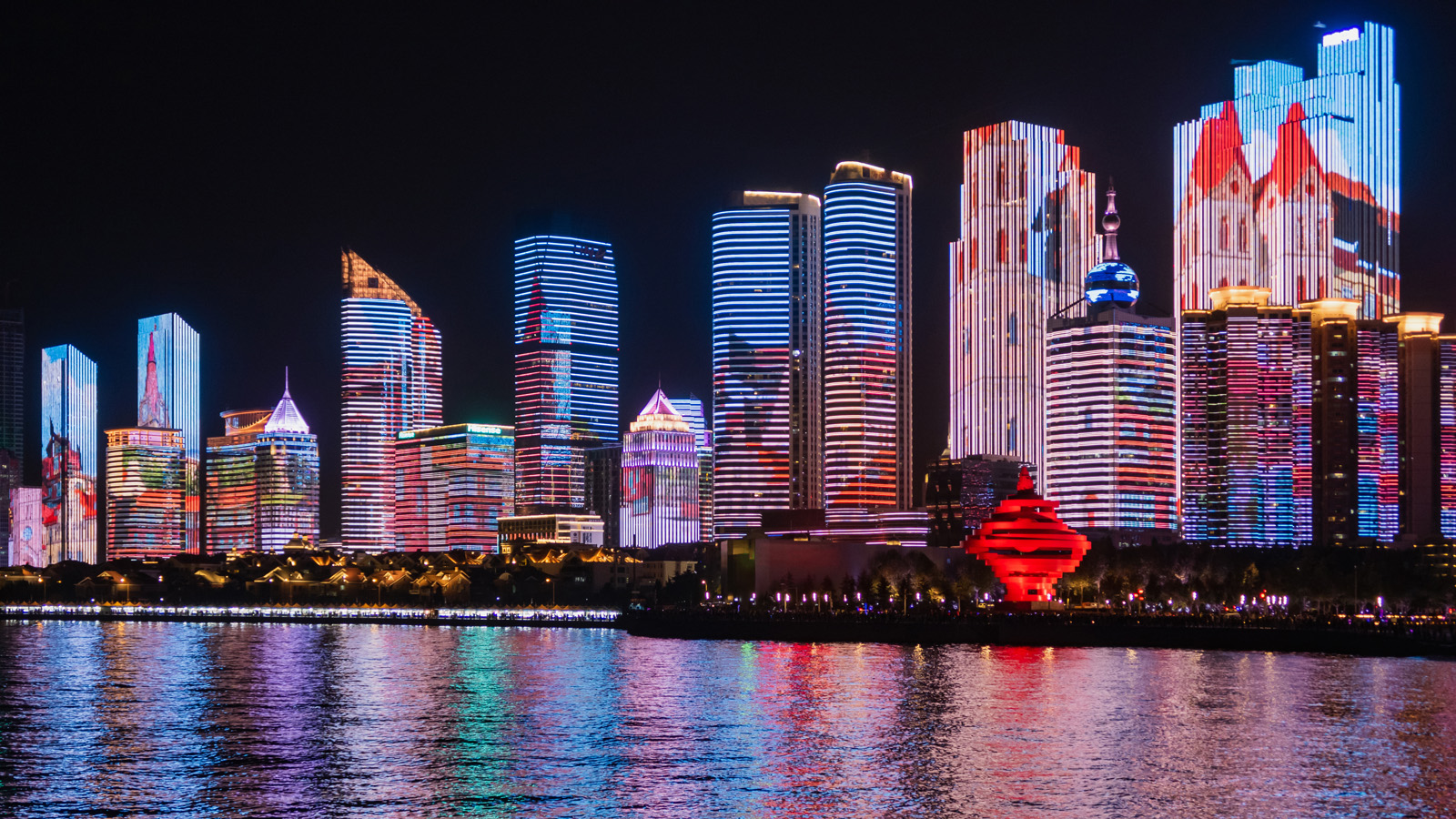
For a modern visual spectacle, head to May Fourth Square. The skyline of the CBD erupts into a synchronized LED Light Show every evening, turning the skyscrapers into massive digital canvases reflecting off the bay waters.

Living Culture & Arts
The Badaguan (Eight Great Passes) neighborhood is an architectural museum without walls. These leafy avenues are lined with over 200 European-style villas built in the 1930s by Russian, German, and Danish residents. It is a favorite spot for wedding photography and quiet, atmospheric walks. Qingdao is also China’s Sailing City. Visit the Olympic Sailing Center to see the marina lifestyle in action, where sailing schools and regattas keep the maritime culture alive and active.

Other Highlights
St. Michael’s Cathedral dominates the old town skyline with its twin red spires. Built by German missionaries, it remains an active Catholic church and a stunning example of Romanesque and Gothic revival architecture. The Governor’s Mansion, a castle-like building designed in the German Art Nouveau style, offers a glimpse into the opulent (and extravagant) lifestyle of the colonial administrators—it was so expensive to build that the Kaiser famously recalled the governor for overspending.

Additional days in Taitung
Cross the Jiaozhou Bay Tunnel to Huangdao (West Coast) to visit Golden Beach (Jinshatan). Unlike the rocky coves of the city side, this is a vast, crescent-shaped stretch of fine sand. It hosts the massive Qingdao International Beer Festival in August, but the rest of the year, it is a spacious, breezy retreat ideal for kite flying and camping.
Read More
For a sober look at 20th-century history, hike up Qingdao Hill Park (Signal Hill). Hidden in the forests are the remains of the German underground command bunkers and gun batteries from the Siege of Qingdao in 1914, where Japanese and British forces ended German rule. The rusted iron doors and tunnels offer a tangible connection to World War I in East Asia.
Finally, explore Pichai Yuan, a restored courtyard area in the old town. While touristy, it revives the atmosphere of old Qingdao street life with traditional opera stages, tea houses, and stalls selling bizarre snacks like starfish and scorpions on sticks—a sensory throwback to the city’s market roots.
For Day Trips, travel north to Jimo Ancient City, a restored walled city that predates Qingdao itself. It offers traditional folk performances and a slower pace. Alternatively, take a high-speed train to Mount Tai (Tai Shan), the holiest of China’s five great mountains, achievable as a long day trip for the ambitious climber.
.